

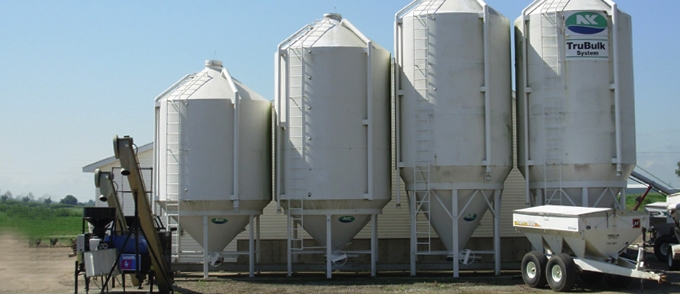
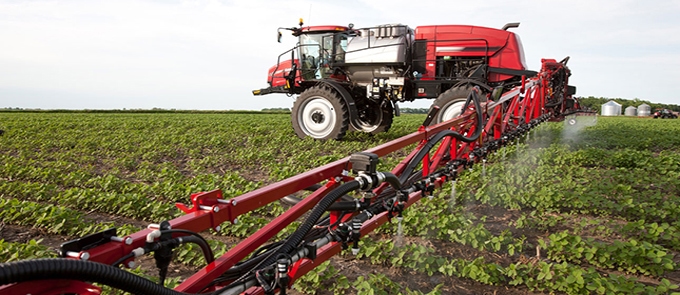
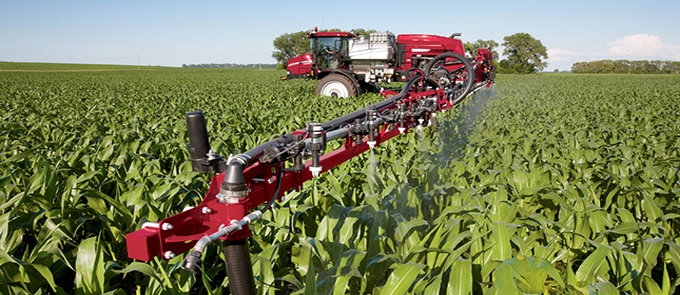

O’Toole Inc, established in 1981, is a full service agronomy dealer located in Letts, Iowa. We use the latest variable rate and GPS technologies to keep our customers on the cutting edge of crop production techniques.
Our expertise and commitment to customer service makes us a valuable partner in your ag business. From seed, chemicals and fertilizer to custom application services we provide outstanding solutions that help our customers produce a healthier crop with higher yields.
Hot Topics from O'Toole Inc
May 21, 2020
Coronavirus Food Assistance Program
| Coronavirus Food Assistance Program (CFAP) |
| Call your local FSA office on Tuesday May 26!!
The USDA announced $16 billion in direct aid. Nearly every type of farm operation across the U.S. is eligible. The funding will be a combined payment sourced from two pools of money: Congressional CARES Act and Commodity Credit Corporation (CCC).
Payments for corn, soybeans, and wheat will be a per bushel payment based on either 50% of the 2019 production or 2019 inventory on January 15th, 2020, whichever is the least. The table below summarizes the non-specialty crop payment amounts.
Producers will initially receive 80% of their eligible payment, with the remainder delayed ensuring that as many farmers as possible receive payments before the $16B is exhausted. Payments are capped at $250,000 per person or entity.
If the PPP loan program is an indicator, it will not be surprising if the $16B runs out quickly and Congress must debate if and what additional funds they will add to the program. Make sure you are at the front of the line for the first round. The early bird gets the federal payment.
Call your local FSA office on Tuesday May 26 to schedule an appointment to apply for the program.
Watch this 3-minute video from the USDA describing the application process.
Learn more at the USDA CFAP website. |
April 1, 2020
Know What You Are Planting!
KNOW WHAT YOU ARE PLANTING!
As spring is right around the corner we all know the challenges we can face with getting the crop planted, but in 2020 it has never been more important to know what seed traits you are planting. With 6 different trait packages available to choose from communication is key in making sure the right herbicide is applied to the correct soybeans. We are not asking you to understand all the different modes of action with these chemicals but for us to better serve you, it all starts with making sure we know what soybeans got planted where.
We are recommending that if a grower chooses a certain trait platform that all the soybeans they plant are that SAME trait.
Also, we would like your help in communicating with your neighbors on all your fields to see what trait package of soybeans they are planting around your fields. You might ask why this is critical? With some of the EPA regulations on certain chemicals there could be added buffers or certain wind directions that we may need to follow to be in compliance with the EPA label.
If you do not purchase your seed from one of our three locations we ask you either save the bag tag or send your agronomist a picture of the bag tag so we can identify the herbicide trait of those soybeans.
It is an exciting time in the soybean industry with all of these options available but WE ALL need to be good stewards and do our part to make sure these traits are around for years to come.
January 9, 2019
Announcement – New Office Manager for O’Toole Inc.
We would like to introduce you to our new Office Manager, Debbie Taylor. She has worked in accounting positions throughout her career. Most recently, Debbie worked at Louisa-Muscatine school district office for 15 years. We are very happy to have her join our team and look forward to introducing you to her the next time you stop by the office.
Jaime Cochran is leaving to go back home to Illinois to be closer to her family. We wish her the best of luck. She has done a wonderful job as our Office Manager for the past 5 years. Her last day will be February 1, 2019.
October 8, 2018
Soybean Damage – Hail Insurance
If you have hail insurance, you may want to check your soybean crops.
A storm went through Louisa County at 3 am this morning (10/08/18) and caused quite a bit of damage to the soybean crops in this area. If you do see damage, you will want to contact your insurance company right away.
February 5, 2016
Annual Customer Meeting 2016
Please accept our invitation for you and a guest to join us for happy hour, dinner and informative meeting!
Thursday, March 3, 2016
5:00 pm – 6:00 pm Happy Hour
5:30 pm Dinner served with speakers immediately following
at The Rendezvous (3127 Lucas St, Muscatine, IA 52761)
Be sure to mark your calendar, you won’t want to miss this meeting! Help us plan for dinner by providing your RSVP by February 24, 2016 to one of the locations listed above or kellyotoole@blueflamepropanellc.com
October 2, 2014
Mark Your Calendar for March 12, 2015
Watch for your invitation to our annual customer meeting. The meeting will be held on March 12, 2015 with a happy hour, industry speaker and dinner at the Rendezvous in Muscatine, IA. We are pleased to announce Dr. Below will speak about how to grow 100 bushel soybeans. If you remember, he spoke to us a couple of years ago about 300 bushel corn. He’s absolutely fantastic and you definitely won’t want to miss this meeting!
Details will be sent early next year!
April 1, 2014
VRT Planting & Seed Treatment
I just have a few updates before what looks to be another hectic spring. If you are interested in variable rate planting, we have the technology available here on a local level with people you trust. We can do it if off of soil types or my preferred method, yield maps. Give us a call soon if you are interested.
I have one another announcement. Last year we installed a state of the art seed treatment system. With the improvements in seed care I believe it will be one of our most important tools to increase and protect soybean yields in the coming years. Even if you haven’t purchased seed from us we would gladly treat anyone’s soybeans. These advanced treatments are very important and we want to make sure you can take advantage of them. Contact Ben Lacina for the details.
Thanks for your continued support,
Greg O’Toole
